Katie Chance Art
Maria Sibylla Merian Original
Maria Sibylla Merian Original
Couldn't load pickup availability
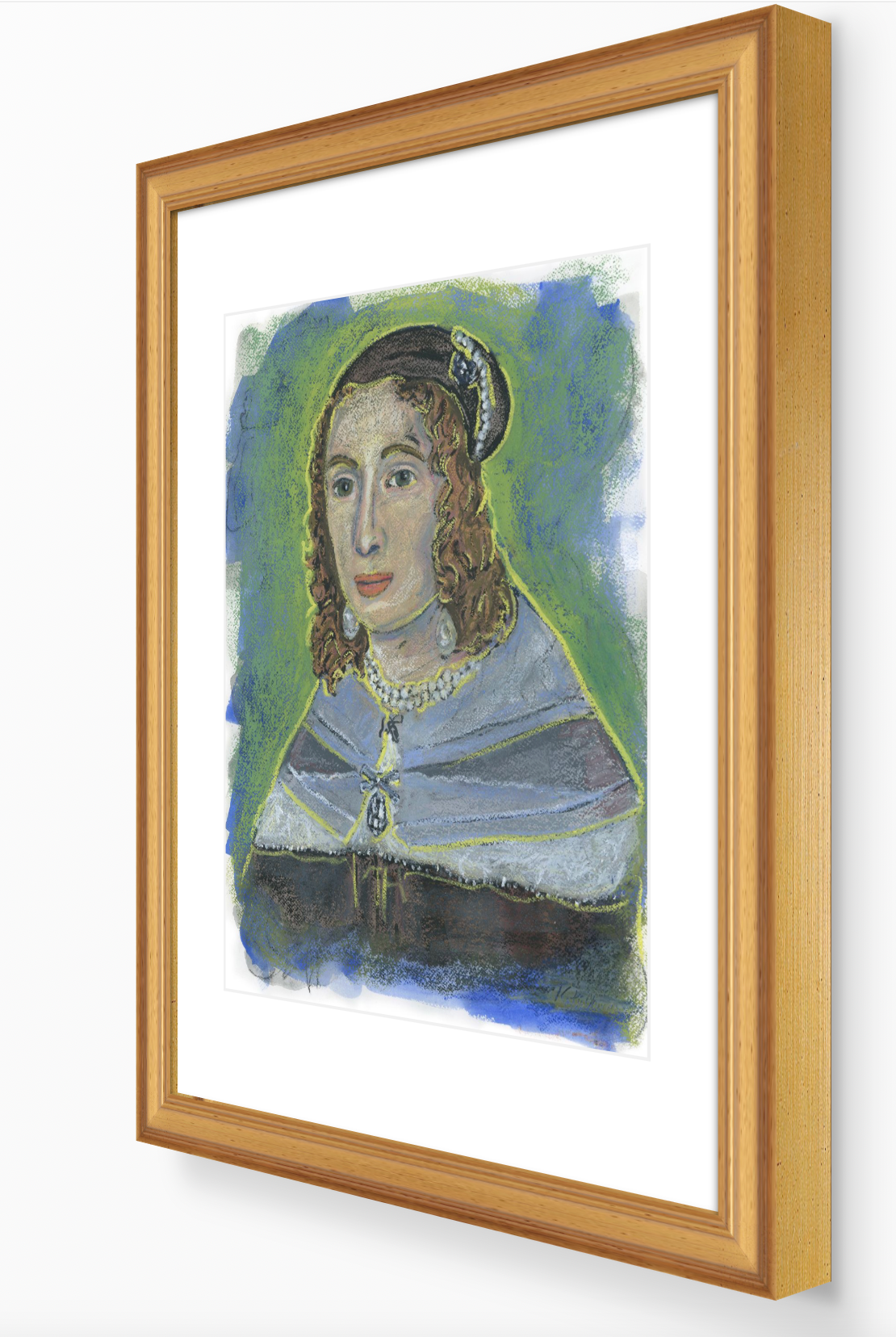
Maria Sibylla Merian — Individual Painting Statement
Maria Sibylla Merian (1647–1717) was a German-born naturalist, scientific illustrator, and pioneering entomologist. She is best known for her groundbreaking studies of insect life cycles, particularly her detailed observations of metamorphosis — the transformation of caterpillars into butterflies and moths.
At a time when many natural processes were poorly understood, Merian conducted careful firsthand observation, documenting insects alongside the plants they depended on. Her illustrated books combined scientific study with artistic precision, helping establish new standards for natural history illustration.
In 1699, she traveled to Suriname in South America to study tropical insects in their natural environment — a remarkable undertaking for a woman of her time. Her published work from this expedition expanded European understanding of ecology, species relationships, and biological transformation.
In this portrait, her calm presence and the organic, shifting environment around her reflect a life devoted to observation and discovery. The layered atmosphere echoes the processes of growth, change, and emergence that defined her work.
This painting honors Maria Sibylla Merian as a pioneering scientific observer whose studies transformed how the natural world was understood and illustrated.
Series Artist Statement — Remarkable Women
Remarkable Women is a portrait series honoring women whose work transformed their fields and expanded what was possible in their time.
Across art, science, and public life, these women reshaped cultural understanding through knowledge, expression, and daring. This series brings their presence forward — not as distant historical figures, but as individuals whose lives and work remain vividly and iconically relevant.
Each painting begins with gestural charcoal studies that explore the woman in action — painting, riding, observing, performing — capturing the physical energy of what she did. These expressive marks remain embedded beneath the final image. A more defined portrait then emerges, layered with watercolor and oil pastel, allowing movement, atmosphere, and structure to coexist.
Each portrait, whether widely known or lesser known, reflects a different form of impact — artistic expression, scientific discovery, cultural leadership, and lived experience. What connects these women is not a single definition of achievement, but the lasting imprint of their work.